
Welcome to WingIt
You are viewing one of seven information pages that we are providing via “QR codes” at different locations across the two dales. The other six can be found at Keld Heritage Centre, Muker, Gunnerside Village Hall, the Low Row Literary Institute, the Two Dales Bakery in Reeth, and the Dales Bike Centre in Fremington.
The barns & outbuildings of Arkengarthdale are ideal nest sites for Swallows. They prefer to be in a shaded space on top of a ledge or roof beam in an open cup – in 2021 we sited a number of swallow cups in Langthwaite. Many people generously leave barns and outbuildings open to accommodate returning nesting pairs, but some barns get converted into accommodation for humans without mitigation for our summer visitors. Part of our ‘Wing It’ project is therefore to provide information on how to renovate buildings sympathetically to preserve the nesting sites of the Swifts, Swallows and House Martins that return here each year to nest.
Our first nest installations for the project in 2021 were in Langthwaite. We placed fifteen Swallow cups in outbuildings and barns there, and we are monitoring their use.
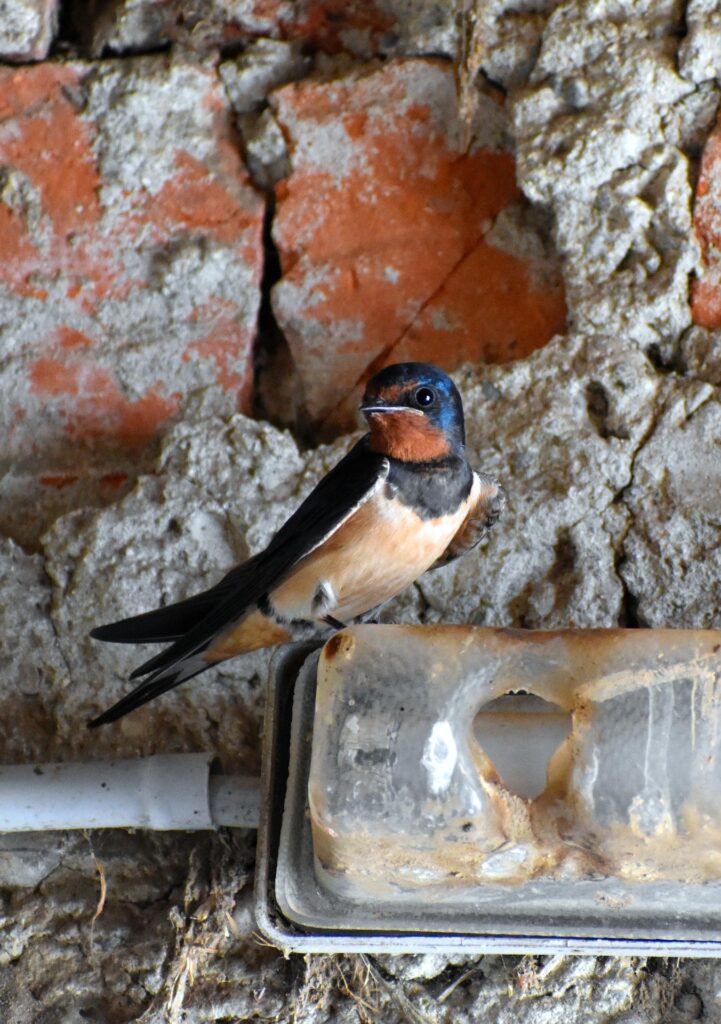
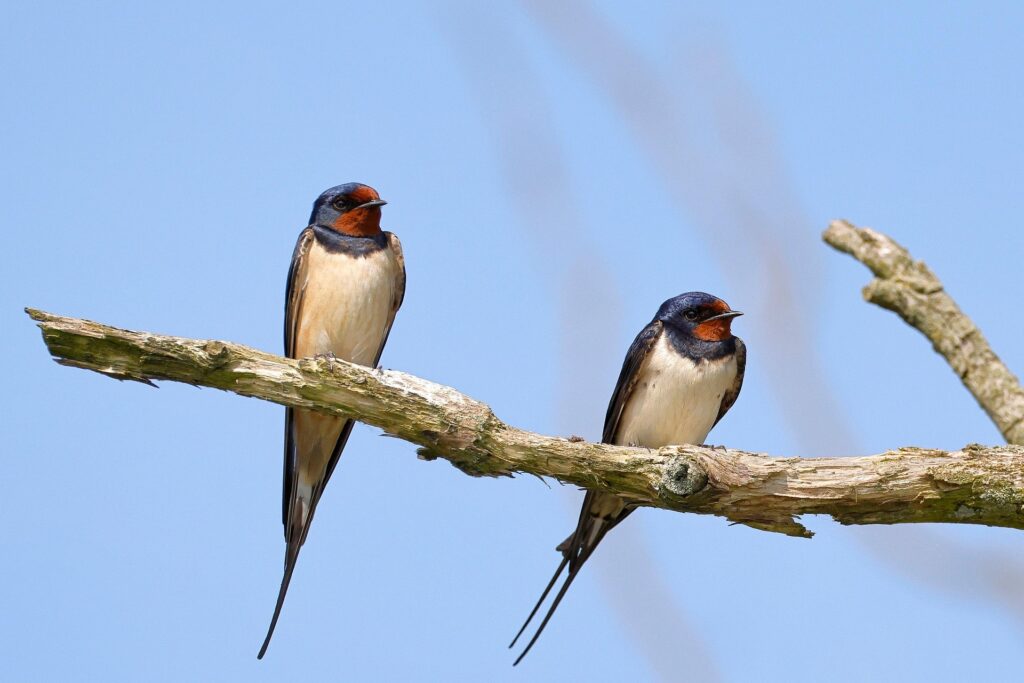
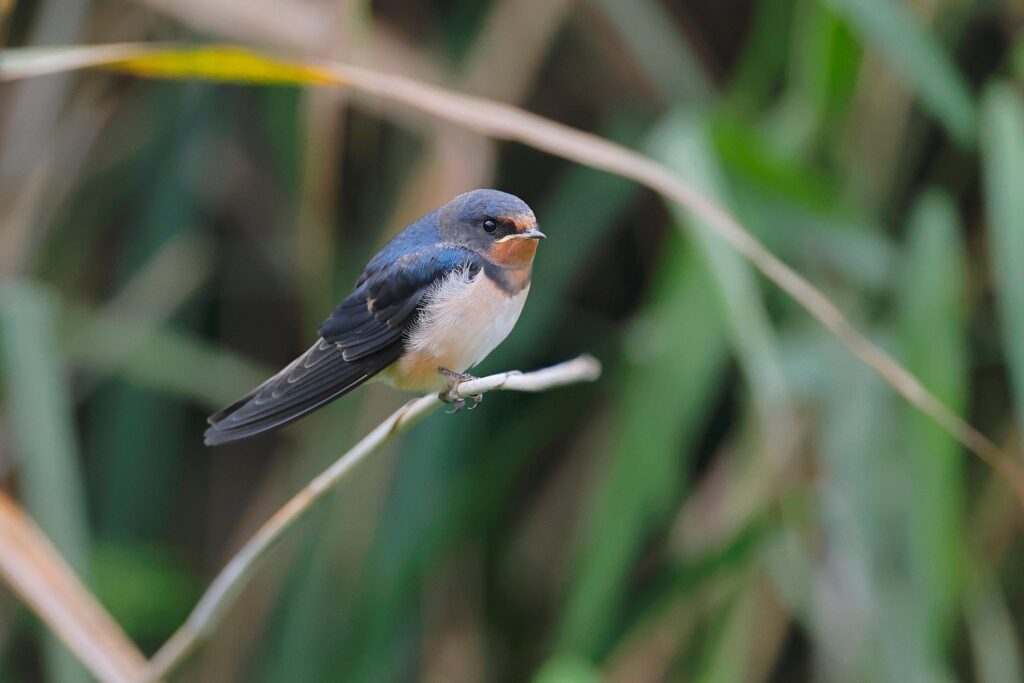
About the Barn Swallow
Barn Swallows are usually the first summer visitors to arrive back in Swaledale and Arkengarthdale in early April, followed closely by House Martins & then, lastly, Swifts. Following their stay here, they migrate to South Africa for the winter.
Where do they nest?
Barn Swallows nest on beams or ledges in outbuildings, sheds and barns. They construct open topped cups of mud and plant material such as straw. Their nests are usually in more concealed locations than House Martins. Swallows usually lay 4-6 eggs and have 2-3 broods per year. Swallows return to the same nest site each year & pair for life.
How do they fly?
Swallows fly high in the sky with a relaxed easy flowing and swooping motion. They feed lower to the ground and fly more evenly than House Martins. They spend most of their time flying, but land to collect mud for their nests. They can swoop down to access water from rivers, and they often hunt for insects across uncut meadows and around the edges of fields, village greens, streams & other open spaces.
What do they look like?
Swallows can appear more ‘elegant’ than House Martins and Swifts with whitish to deep peach-buff underparts, dark blue glossy upperparts, a deep rust colored chin & throat, and a reddish-brown forehead with a broad blue black chest band. They have a forked tail with long outer streamers (shorter on females) and slender wings, which help them maneouver in the air. Juveniles are paler than the adults and have a shorter tail.
Apart from in the sky, where might they be seen?
Congregations of excitable chattering groups of Swallows are common (particularly on power lines), especially in the autumn before migration.
Are they declining in number?
Swallows are declining in number. Reasons for this are not fully understood but are believed to be a result of a combination of wetter summers, loss of suitable feeding habitats and nesting sites, decreases in first year survival, smaller broods and, like many other birds that feed on insects, a reduction in insects. Home renovations and barn conversions can lead to a loss of existing nest sites; providing alternative nesting opportunities for Swallows should be considered when planning such works.

About the WingIt project
Sustainable Swaledale started the ‘Wing It’ project in 2021. Residents of Swaledale & Arkengarthdale had noticed that there appeared to be fewer Swallows, Swifts and House Martins returning to the dales each year. While a decline of these birds has been recorded throughout the UK, when the ‘Wing It’ team looked for information on their nesting locations and populations in the two dales very little information could be found.
The ‘Wing It” project has four objectives.
- To collect data throughout the summer months to identify & document birds in flight and active nest sites over a five-year period. These data help inform our project but also contribute to the wider Yorkshire Dales National Park records and national statistics.
- To support the three species by providing suitable nesting sites.
- To raise awareness & knowledge of the three species & their needs within the two dales.
- To maintain their feeding habitats, through parallel projects in meadow restoration & tree planting.
The WingIt project has been kindly supported by The Yorkshire Dales National Park Authority’s Sustainable Development Fund. This fund is open to individuals, businesses, community groups or voluntary sector bodies. It provides an accessible source of money for a range of projects that result in positive benefits for the National Park’s environment, economy and communities, while enhancing and conserving local culture, wildlife and landscape. www.yorkshiredales.org.uk/sdf
